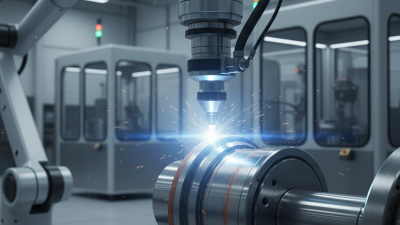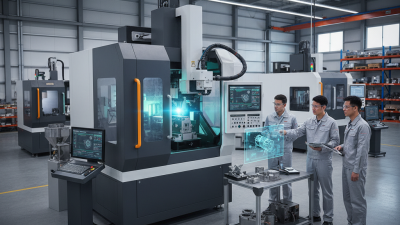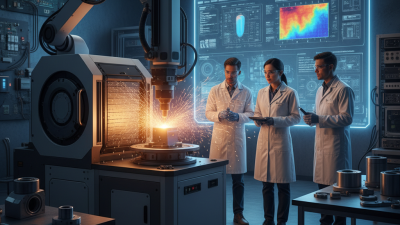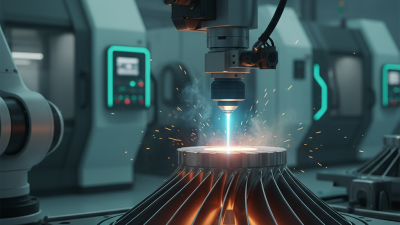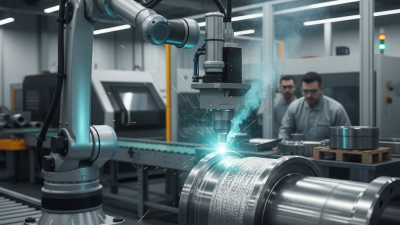
In 2026, Laser Cladding is moving beyond laboratory demonstrations. It is becoming a practical choice for repairing turbine blades, mining tools, molds, shafts, and energy equipment. Global buyers now face several machine formats, including coaxial powder systems, side-feed powder systems, wire-fed platforms, and hybrid laser machining centers.
The numbers deserve careful reading. The Wohlers Report 2025 valued the global additive manufacturing industry at approximately US$24.8 billion in 2024. Its findings support broader industrial adoption, although they do not measure Laser Cladding alone. MarketsandMarkets also identifies repair, wear resistance, and material efficiency as major drivers in the laser cladding market. Estimates vary between research firms. The gap matters.
Dr. Frank Brückner of Fraunhofer IWS describes laser cladding as “a flexible tool for local surface modification and repair.” That flexibility affects machine selection. A powder-fed system may suit intricate repairs and controlled coating thickness. A wire-fed machine can reduce material waste during larger builds. Hybrid equipment may improve finishing accuracy, but it usually demands higher investment and stronger process expertise.
This guide compares the leading Laser Cladding machine types for global buyers in 2026. It considers deposition rate, beam control, powder or wire delivery, workspace size, automation, maintenance, and operator training. Fit comes first. A machine that performs well on stainless steel may struggle with nickel alloys or reflective aluminum. Buyers should also request real test coupons, measured dilution data, and service records. Brochures rarely show the difficult parts. Reality is messier.
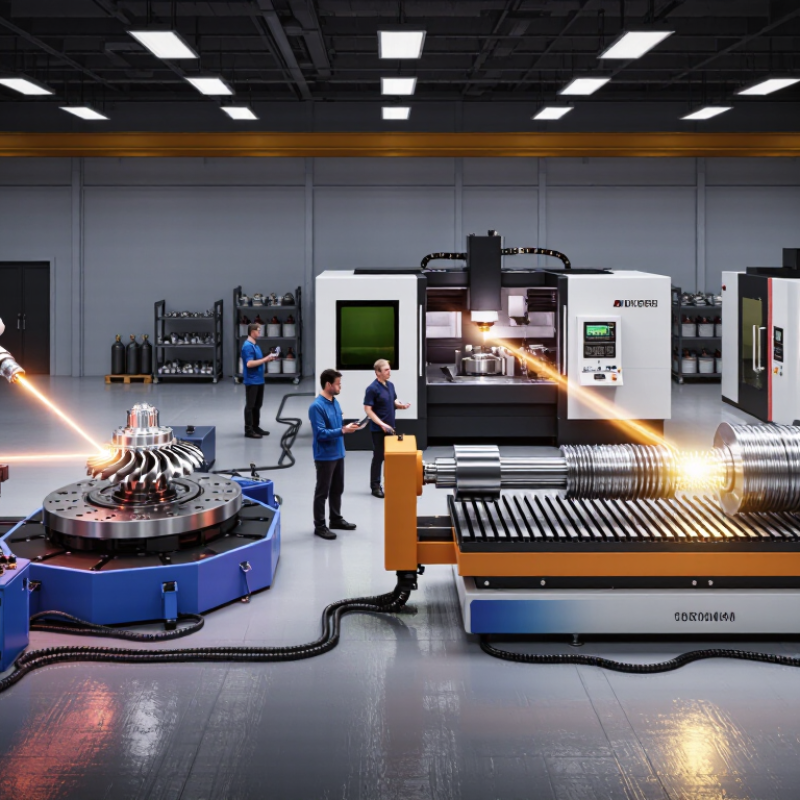
A laser cladding machine is an industrial system that bonds protective metal onto a component surface. It uses a concentrated laser beam to create a small molten pool. Powder or metal wire enters this pool and fuses with the base material. The process builds a dense metallurgical layer with limited heat distortion. It is not ordinary coating.
Common systems use powder feeding, wire feeding, or both for specific production needs. Powder-fed machines suit complex shapes and precise repairs. Wire-fed machines can reduce material waste during larger surface work. Some machines use fixed optics, while others use robotic arms for long shafts, turbine parts, or mining tools. The correct type depends on geometry, material, deposition rate, and required accuracy.
Real operation needs careful control. Laser power, travel speed, feeding rate, and shielding gas must match the alloy and substrate. A clean surface matters. Poor preparation can cause pores, cracks, or weak bonding. Technicians should inspect layer thickness and hardness after processing. Small parameter changes can alter the melt pool quickly. That part is easy to underestimate. Global buyers should also check maintenance access, operator training, electrical compatibility, and documented quality procedures. A powerful machine may still perform poorly when its software, optics, or feeding system does not fit the workshop.
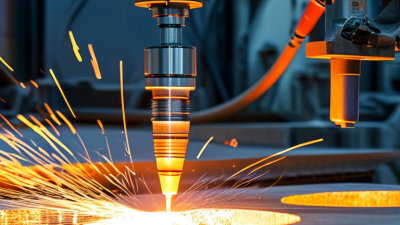
Laser cladding machines repair and protect metal surfaces by adding a tightly bonded layer. A laser creates a small molten pool on the workpiece. Powder or wire enters this pool through a controlled delivery system. The material melts, mixes slightly, and solidifies as the laser moves. This creates a dense coating with strong metallurgical bonding.
In 2026, common machine types include powder-fed, wire-fed, high-speed, and robotic laser cladding systems. Powder-fed machines suit complex shapes and precise coating control. Wire-fed systems can reduce material waste on larger components. Robotic systems guide the laser along programmed paths, while sensors monitor height, temperature, and powder flow. Shielding gas helps limit oxidation. Cooling systems protect the laser head and workpiece. The process sounds simple, but setup errors can cause pores, uneven layers, or excessive dilution. A first trial may expose problems that drawings never show.
Tips: Clean the surface carefully before cladding. Check powder size, wire condition, laser power, travel speed, and gas flow together. Do not judge quality by appearance alone. Cross-section testing can reveal hidden cracks or weak bonding. Keep a process record for every batch. Small changes in material temperature can affect the final layer. Experienced operators still review these details, because automation does not remove every variable.
Laser cladding works by feeding metal powder or wire into a focused laser beam. The material melts together with a thin layer of the substrate, forming a metallurgically bonded coating with low heat input and limited distortion.
Indicative industrial operating ranges shown in kilowatts. Actual requirements vary with material, coating thickness, travel speed, spot size, and production rate.
Flexible for wear-resistant coatings, corrosion protection, and complex geometries. Powder is delivered through a nozzle into the melt pool.
Offers high material utilization and is suitable for large components, high deposition rates, and economical repair work.
Uses controlled high-speed motion and a shallow melt pool to create thin, uniform coatings with reduced thermal impact.
Designed for localized dimensional restoration, additive build-up, and repair of high-value parts such as molds, shafts, and turbine components.
2026 Top Laser Cladding Machine Types for Global Buyers
Main Types of Laser Cladding Machines in 2026
Laser cladding machines in 2026 are mainly divided by material delivery, motion system, and application scale. Coaxial powder machines feed metal powder through the laser head, creating consistent tracks around shafts, valves, and complex surfaces. They offer strong control over overlap and heat input. Off-axis powder systems are often simpler and more affordable, but nozzle alignment needs closer attention.
Wire-fed laser cladding machines use metal wire instead of powder. They can achieve high material utilization and suit large repairs, such as turbine edges or heavy rollers. However, wire melting requires stable feeding and accurate torch movement. Small changes in wire position may create uneven beads. That detail is easy to underestimate.
CNC laser cladding machines provide repeatable paths for standard components. Robotic systems offer more flexibility for curved parts, large structures, and changing production tasks. Some facilities combine laser cladding with machining in one cell, reducing handling time and alignment errors. Enclosed systems improve process monitoring and workplace protection, while compact systems fit repair workshops with limited floor space.
The best type depends on geometry, alloy, deposition rate, tolerance, and operator skill. A powder system may suit detailed surfaces, while wire may reduce consumable waste on large parts. No machine is perfect. Trial cladding, cross-section checks, and long-term wear tests remain essential before global buyers approve a production model.
2026 Top Laser Cladding Machine Types for Global Buyers: How to Compare Machines for Different Applications
Choosing a laser cladding machine should begin with the application, not the machine’s advertised power. Powder-fed systems suit complex repairs, uneven surfaces, and controlled material placement. Wire-fed systems can reduce material waste during large-area rebuilding. Coaxial powder delivery supports multidirectional work, while lateral delivery may offer simpler access for flat components. The right choice depends on part geometry, alloy type, layer thickness, and production volume.
Compare more than laser wattage. Check deposition rate, powder or wire efficiency, heat input, cladding width, and repeatability. A turbine shaft may require low distortion and accurate rotation control. A mining component may need faster coverage and strong wear resistance. Inspect the motion system, monitoring sensors, cooling design, and software compatibility. Ask for test coupons made from your actual substrate and alloy. Catalog results can look impressive. Real parts may behave differently.
Tips: Measure the complete workflow, including powder handling, fixture changes, cleaning, and post-machining. Request maintenance records and operator training details. Confirm spare-part availability in your region. Calculate cost per finished component, not just equipment price. A perfect machine rarely exists. Even experienced buyers can overlook setup time or operator skill. Leave room for trials, because the first parameter set may not produce the expected hardness or bond quality.
| Machine Type | Material Feed | Typical Laser Power | Typical Deposition Rate | Typical Clad Thickness per Layer | Suitable Materials | Best-Fit Applications | Main Advantages | Key Limitations |
|---|---|---|---|---|---|---|---|---|
| Powder-Fed Laser Cladding System | Metal powder delivered through a nozzle into the laser melt pool | 1–6 kW | 0.2–2.5 kg/h | 0.3–2.0 mm | Nickel-based alloys, cobalt-based alloys, stainless steels, tool steels, copper alloys, carbide-reinforced powders | Wear protection, corrosion protection, dimensional restoration, and precision repair | Good control of heat input; suitable for complex geometries; broad alloy selection; relatively low dilution when properly optimized | Powder handling and recovery are required; powder cost is generally higher than wire; operator safety controls are necessary |
| Wire-Fed Laser Metal Deposition System | Metal wire fed continuously into the melt pool | 2–12 kW | 0.5–8.0 kg/h | 0.8–3.0 mm | Stainless steel, nickel alloys, titanium alloys, aluminum alloys, tool steels | Large components, structural deposition, near-net-shape manufacturing, and high-volume build-up | High material utilization, usually above 90%; clean material handling; lower consumable waste; high productivity | Less suitable for very small or intricate features; wire delivery and melt-pool alignment must be carefully controlled |
| Coaxial Powder Nozzle System | Powder delivered symmetrically around the laser beam | 1–6 kW | 0.2–2.0 kg/h | 0.3–1.5 mm | Nickel alloys, cobalt alloys, stainless steels, tool steels, selected copper alloys | Multi-axis repair, circular features, turbine components, shafts, and direction-independent deposition | Deposition can be performed in multiple travel directions; good accessibility around complex parts; consistent powder coverage | Nozzle design and powder distribution strongly affect process stability; generally higher system cost than basic side-feed configurations |
| Lateral or Off-Axis Powder System | Powder injected from the side of the laser beam | 1–4 kW | 0.1–1.5 kg/h | 0.3–1.5 mm | Nickel-based alloys, stainless steels, cobalt alloys, tool steels | Flat surfaces, accessible edges, simple repair paths, and retrofit cladding cells | Simple and cost-effective configuration; easy visual access to the melt pool; practical for straightforward geometries | Deposition direction is more sensitive to nozzle orientation; limited access in confined or highly curved areas |
| High-Speed Laser Cladding System | Fine metal powder, normally injected ahead of or around a focused laser beam | 1–6 kW | 0.1–1.5 kg/h | 0.05–0.5 mm | Nickel alloys, stainless steels, cobalt alloys, and other fine cladding powders | Large-area surface treatment, thin wear layers, corrosion barriers, hydraulic rods, and cylindrical components | High travel speed; low heat input; small heat-affected zone; low dilution; efficient coverage of broad surfaces | Usually limited to thin layers and suitable surface geometries; less effective for deep dimensional restoration or heavy build-up |
| Laser Cladding Repair Cell with 5-Axis Motion | Powder or wire, combined with programmable multi-axis positioning | 1–6 kW | 0.2–3.0 kg/h | 0.3–2.0 mm | Tool steels, nickel alloys, cobalt alloys, stainless steels, titanium alloys | Dies, molds, turbine parts, aerospace components, hydraulic parts, and irregular repair areas | Access to complex surfaces; repeatable tool paths; supports scanning, height correction, and automated repair strategies | Higher capital cost and programming effort; requires accurate part measurement, fixturing, and process development |
| Robot-Mounted Laser Cladding System | Powder or wire mounted on an industrial robot | 1–6 kW | 0.2–4.0 kg/h | 0.3–2.5 mm | Stainless steels, nickel alloys, cobalt alloys, tool steels, titanium alloys | Large workpieces, shafts, molds, mining components, energy equipment, and flexible multi-part production | Large working envelope; flexible part access; suitable for batch production and oversized components | Robot path accuracy and stiffness are lower than those of some dedicated machine tools; calibration and thermal management are important |
| CNC Laser Cladding Machine | Usually powder-fed; wire-fed configurations are also available | 1–8 kW | 0.2–5.0 kg/h | 0.3–3.0 mm | Tool steels, stainless steels, nickel alloys, cobalt alloys, titanium alloys | Precision repair, mold and die restoration, production parts, and repeatable machining-cladding workflows | High positioning accuracy; strong integration with CNC machining; repeatable production cycles; suitable for closed-loop control | Working envelope may be smaller than a robot cell; dedicated fixturing and part-specific programming can increase setup time |
In 2026, global buyers will compare powder-fed, wire-fed, high-speed, and hybrid laser cladding machines. Each type serves a different production reality. Powder-fed systems offer precise coating control and complex geometries. Wire-fed machines usually reduce material waste and simplify storage. High-speed systems suit larger surfaces and faster repair cycles. Hybrid platforms combine cladding with machining, but their integration can increase training demands.
Independent data helps frame the purchase. Grand View Research estimated the global laser cladding market at about USD 0.6 billion in 2023, with strong growth expected through 2030. MarketsandMarkets has also forecast double-digit annual growth for laser cladding during the current decade. These figures support investment, but they do not prove every machine will deliver acceptable value. Request measured results from comparable alloys, wall thicknesses, and production speeds.
Material compatibility remains critical. Ask for test coupons using your actual substrate and powder or wire. Check deposition rate, dilution, porosity, hardness, and heat-affected depth. A faster laser is not always better. Excessive heat can distort a thin shaft, while insufficient fusion can weaken a repair. Evaluate laser power, motion accuracy, enclosure design, powder recovery, software usability, and local service response. Confirm alignment with applicable laser-safety and machinery-safety standards. Include electricity, consumables, maintenance, operator training, and downtime in the total-cost model. The overlooked detail is often integration with existing inspection equipment. Many buyers underestimate it. Sometimes, the cheaper machine becomes the slower decision.