
Leave Your Message
Choosing an Optical Fiber Laser in 2026 requires more than comparing wattage and price. Manufacturing lines now demand stable power, precise beam delivery, lower downtime, and measurable energy efficiency. The right source must fit the material, process, and production rhythm.
Industry forecasts support this careful approach. Grand View Research identifies strong growth in fiber laser adoption through 2030, driven by automotive, electronics, aerospace, and medical manufacturing. MarketsandMarkets also links market expansion to high-power cutting, welding, marking, and automated processing. These reports show opportunity, but forecasts differ because market definitions and regional data vary. Treat predictions as guidance, not proof.
A practical evaluation begins with application details. Thin stainless steel may need a different wavelength and power profile than reflective copper. A 6 kW cutting system can appear impressive, yet it may waste energy on small components. Check beam quality, M² value, modulation speed, cooling design, connector reliability, and maintenance access. Ask for long-duration test records, not only showroom samples. Confirm output stability after hours of operation.
Service matters. Spare-parts availability, factory support, safety certification, and software compatibility can determine total ownership cost. Reports from the International Energy Agency highlight continuing pressure on industrial energy efficiency, making electrical consumption an important selection factor. I would not choose solely from a brochure. Real production data is usually less flattering. That is useful. A controlled trial, with your materials and operators, can reveal thermal drift, inconsistent marks, or hidden setup delays. In 2026, the best Optical Fiber Laser is not necessarily the most powerful. It is the one that performs reliably, safely, and economically in your actual workflow.
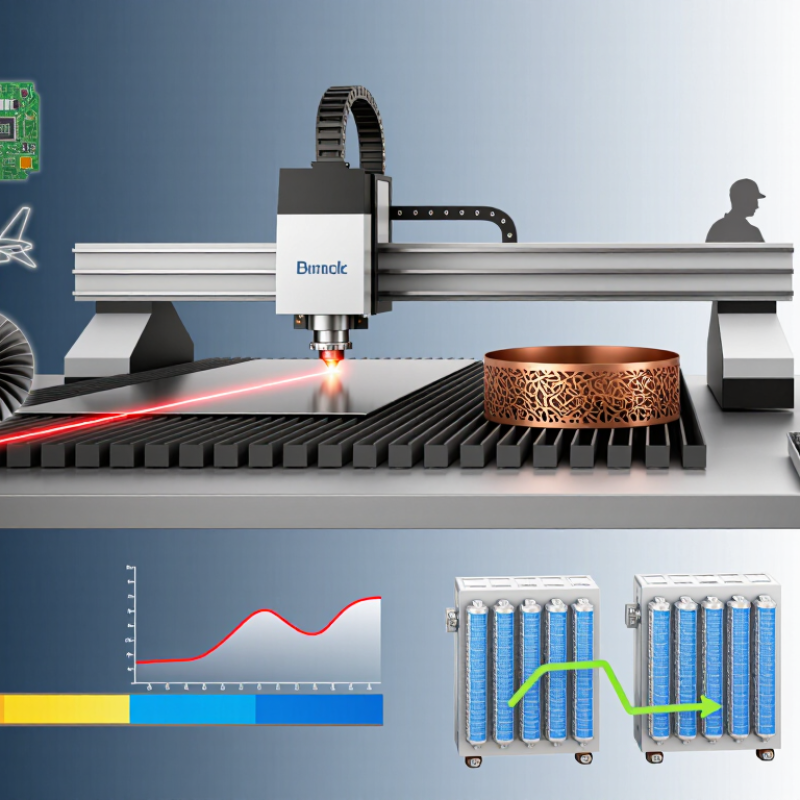
How to Choose an Optical Fiber Laser in 2026?
Choosing an optical fiber laser starts with its operating type. Continuous-wave lasers suit stable cutting, welding, and heat treatment. Pulsed lasers create controlled energy bursts for marking, cleaning, and precision drilling. Ultrafast systems reduce heat-affected zones during delicate processing. The wrong pulse width can produce rough edges or unnecessary thermal damage. It happens more often than suppliers admit.
Core technology matters as much as output power. Ytterbium-doped fibers support common industrial wavelengths near 1,070 nanometers. Erbium-doped designs operate near 1,550 nanometers, which benefits selected sensing and communications applications. Master-oscillator power-amplifier architectures improve scalability and beam control. Pump coupling, fiber design, and cooling determine real stability. A high wattage label alone proves very little.
MarketsandMarkets reported that the global fiber laser market could grow from about 4.9 billion dollars in 2024 to 8.5 billion dollars by 2029. Grand View Research also identified double-digit annual growth through the decade. These figures suggest stronger demand, but market forecasts remain assumptions. Compare wall-plug efficiency, beam quality, maintenance intervals, and warranty terms. Check performance at the actual duty cycle, not only laboratory conditions. Ask for cut samples using your material thickness. Measure the kerf, edge texture, and energy consumption. Real production data is harder to polish.
| Laser Type / Core Technology | Typical Wavelength | Typical Output Range | Operating Mode | Main Advantages | Key Limitations | Typical Applications | Best Selection Indicators |
|---|---|---|---|---|---|---|---|
| Ytterbium-Doped Fiber Laser | 1,030–1,100 nm | 20 W to multiple kilowatts | Continuous wave, modulated, QCW, or pulsed | High electrical efficiency, excellent reliability, good beam quality, and strong industrial maturity | Near-infrared wavelength is less strongly absorbed by some materials than shorter wavelengths | Metal cutting, welding, cladding, additive manufacturing, marking, and micromachining | Choose when high power, low maintenance, and versatile metal processing are priorities |
| Erbium-Doped Fiber Laser | 1,530–1,565 nm | Mill watts to tens of watts; higher power is possible in specialized architectures | Continuous wave, narrow-linewidth, or pulsed | Low-loss transmission window for silica fiber, good spectral quality, and compatibility with optical communications | Generally unsuitable for very high-power bulk-metal processing compared with ytterbium systems | Optical communications, sensing, spectroscopy, lidar, and precision sources | Select when eye-safe 1.5 μm-class operation, narrow linewidth, or telecom compatibility is required |
| Thulium-Doped Fiber Laser | 1,900–2,050 nm | 1 W to hundreds of watts, depending on architecture | Continuous wave, modulated, or pulsed | Useful absorption characteristics for polymers, water-containing materials, and selected medical applications | More demanding pump configuration and thermal management; components may be less standardized | Medical procedures, polymer processing, remote sensing, and specialty material processing | Choose when approximately 2 μm wavelength absorption provides a process advantage |
| Holmium-Doped Fiber Laser | 2,050–2,150 nm | Typically watts to tens of watts in specialized systems | Continuous wave or pulsed | Strong interaction with water and potential for efficient operation near the 2.1 μm region | Smaller product ecosystem and more limited high-power deployment than common 1 μm systems | Medical, scientific, sensing, and specialty infrared applications | Select for water-rich targets or applications specifically requiring the 2.1 μm band |
| Raman Fiber Laser | Wavelength depends on pump and Raman shift; often tunable across specialized bands | Mill watts to tens of watts, with higher levels in engineered systems | Continuous wave, narrow-linewidth, or pulsed | Flexible wavelength generation, broad spectral coverage, and useful specialty-source capability | Cascaded designs can be more complex and may require careful suppression of unwanted Stokes orders | Spectroscopy, sensing, lidar, research, and wavelength-specific illumination | Choose when the required wavelength is not efficiently available from a conventional rare-earth-doped fiber |
| Master Oscillator Power Amplifier (MOPA) | Usually 1,030–1,100 nm for ytterbium systems; other bands are possible | Mill watts seed power to multi-kilowatt amplified output | CW, quasi-CW, nanosecond, or ultrafast pulse formats | Independent control of wavelength, linewidth, pulse duration, repetition rate, and output power | More optical components, greater sensitivity to nonlinear effects, and higher system complexity | Precision marking, micromachining, lidar, nonlinear optics, and high-power material processing | Select when pulse shaping, narrow linewidth, or flexible parameter control is important |
| Single-Mode Fiber Laser | Commonly 1,030–1,100 nm; other dopants support other bands | Mill watts to several hundred watts, depending on core design | CW or pulsed | Near-diffraction-limited beam, small focused spot, and high precision | Power scaling is limited by nonlinearities, thermal load, and mode instability | Fine marking, micro-welding, electronics processing, and precision research | Choose when spot size, focusability, and beam quality matter more than maximum power |
| Large-Mode-Area or Multimode Fiber Laser | Most commonly around 1,070 nm in high-power ytterbium systems | Hundreds of watts to multiple kilowatts | Primarily continuous wave, modulated, or QCW | Higher power scalability and lower power density inside the gain fiber | Lower beam quality or more complex beam delivery compared with a true single-mode design | Cutting, welding, thick-section processing, cladding, and directed-energy deposition | Select when processing speed and power capacity outweigh the need for the smallest possible spot |
| Q-Switched Pulsed Fiber Laser | Commonly 1,030–1,100 nm; 1,530–1,565 nm systems are also used | Average power from a few watts to several hundred watts; pulse energy commonly tens to hundreds of microjoules | Nanosecond pulses, often approximately 10–200 ns | High peak power, efficient ablation, and good contrast for marking | Can produce more heat-affected zone than ultrafast sources; pulse control is less flexible | Metal marking, engraving, oxide removal, and surface texturing | Choose for cost-effective nanosecond marking and moderate-ablation processes |
| Mode-Locked Ultrafast Fiber Laser | Commonly near 1,030–1,560 nm | Average power from milliwatts to tens of watts; pulse energy typically nanojoules to microjoules | Picosecond or femtosecond pulses | Very low heat input, high peak intensity, and precise material removal | Higher cost and tighter requirements for dispersion control, pulse management, and beam delivery | Glass and semiconductor micromachining, medical devices, micro-drilling, and scientific research | Select when minimal thermal damage and micron-scale processing quality are essential |
| Tunable or Narrow-Linewidth Fiber Laser | Application-specific; commonly within the 1–2 μm range | Mill watts to tens of watts; higher power requires specialized designs | Continuous wave or controlled modulation | Precise wavelength control, low spectral width, and high coherence | Reduced tuning range or output power compared with fixed-wavelength industrial sources | Interferometry, coherent lidar, spectroscopy, sensing, and metrology | Choose when wavelength stability, coherence, or spectral resolution is a primary requirement |
Note: Output ranges and pulse characteristics are representative engineering ranges rather than universal limits. Actual performance depends on fiber core design, pump configuration, cooling, cavity architecture, beam delivery, and operating conditions.