2026 Top Laser Head Technologies and Innovations?
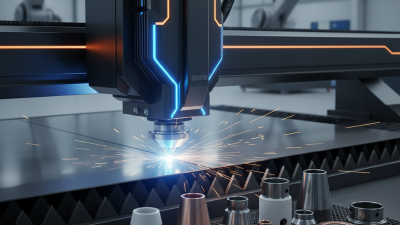
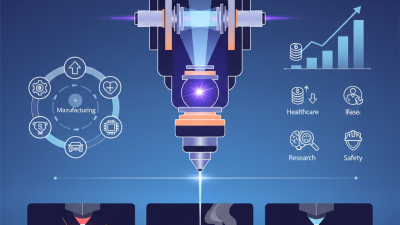
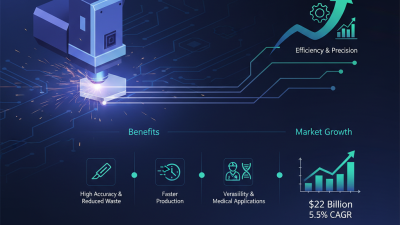
The landscape of laser technology is evolving rapidly, with 2026 promising significant advancements in Laser Head innovations. According to a recent report by MarketsandMarkets, the global laser technology market is projected to reach $20 billion by 2026, reflecting a robust compound annual growth rate of 9.2%. This growth is driven by an increasing demand for precision laser cutting, engraving, and medical applications. The adoption of Laser Heads in manufacturing processes enhances efficiency and accuracy, underscoring their critical role in various industries.
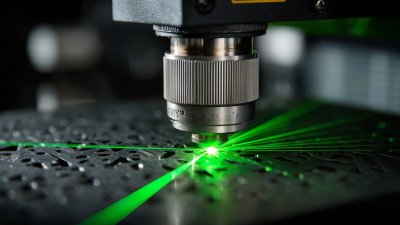
Innovations in Laser Head design are paving the way for improved performance. For instance, advancements in fiber laser technology are increasing power while reducing energy consumption. Moreover, integration with automation and AI is becoming a common trend. However, challenges remain, such as the need for standardization and the high initial investment costs. As organizations adopt these cutting-edge technologies, it is essential to reflect on how they align with specific operational goals.
The future of Laser Head technology holds immense potential. Yet, industry leaders must navigate the complexities of rapid innovation. Balancing performance, cost, and functionality will be crucial. While the excitement around emerging technologies is palpable, a careful approach is necessary to ensure sustainable advancements. The path ahead offers opportunities and challenges alike.
Emerging Trends in Laser Head Technologies for 2026
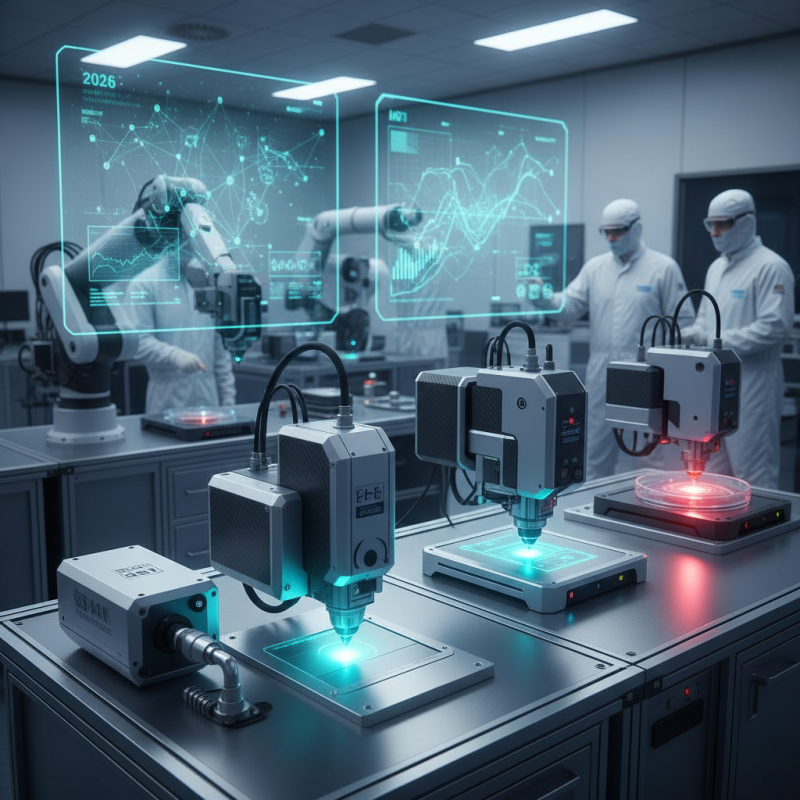
As we approach 2026, the landscape of laser head technologies is rapidly evolving. Key innovations are centered on increased efficiency and versatility. New designs offer greater adaptability across various industries. These advancements could reduce energy consumption significantly, addressing both cost and environmental concerns.
One notable trend is the integration of AI into laser systems. This allows for smarter operation and real-time adjustments during use. Enhanced precision in targeting can improve outcomes in fields like manufacturing and healthcare. However, the reliance on AI could prompt questions about control and reliability. Operators must remain vigilant to ensure optimal performance.
Collaboration between sectors is also emerging. Manufacturers and researchers are working closely to drive innovation. This partnership aims to tackle challenges in performance and application. Yet, rapid developments can lead to uneven adoption rates. Some smaller businesses may struggle to keep up. The road ahead might require a balance between cutting-edge technology and accessibility for all users.
Key Innovations in Laser Head Design and Functionality
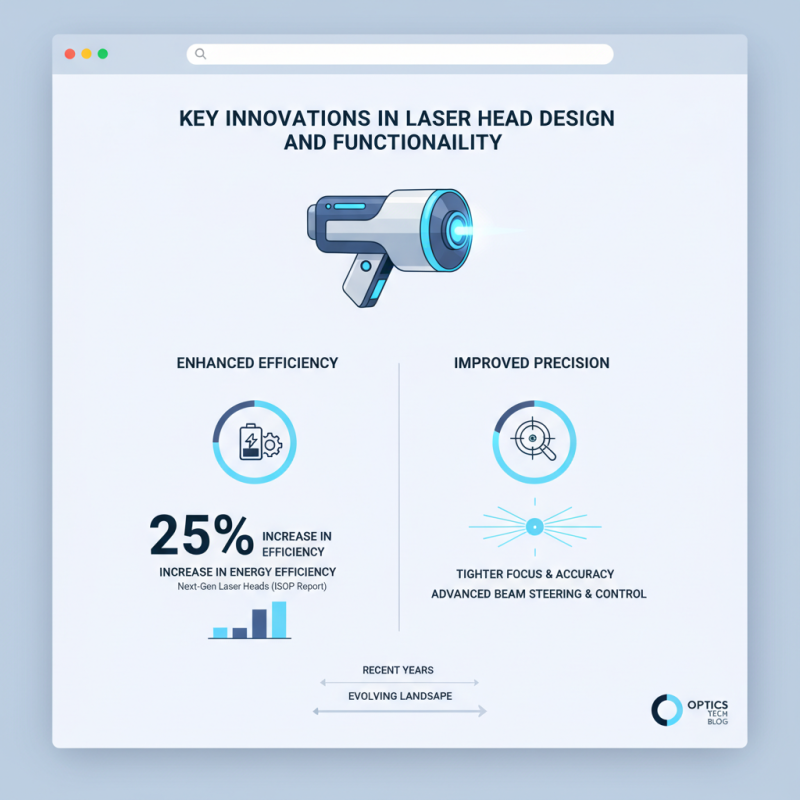
The landscape of laser head technology is evolving. In recent years, advancements have centered around enhancing efficiency and precision. For instance, a report from the International Society for Optics and Photonics highlights a 25% increase in energy efficiency for next-generation laser heads.
Innovators are focusing on new materials and designs. These developments improve heat management, leading to more stable operation. Additionally, the integration of AI and machine learning significantly refines processing speeds. A study from Laser Focus World reveals that systems employing these technologies can achieve up to a 40% faster turnaround for manufacturing processes.
However, not all innovations are flawless. Some new designs face challenges in reliability during long-term use. Engineers are scrutinizing these issues to advance durability. Moreover, cost implications of advanced technologies are still a concern for many manufacturers. Balancing performance with affordability remains a critical task in the industry.
Advancements in Materials for Enhanced Laser Head Performance
Advancements in materials are reshaping laser head technology. Researchers emphasize the importance of composite materials. These materials enhance thermal conductivity, making laser heads more efficient. In particular, high-performance ceramics are gaining traction. They can withstand high temperatures without losing integrity.
A recent industry report states that ceramic-based laser heads show a 30% increase in durability. Furthermore, innovative coatings are being developed. These coatings help reduce wear and tear. They also improve energy absorption rates, creating more powerful beams. Factories are embracing these innovations to increase output and reduce costs.
Tip: Consider exploring new material options for your laser equipment. This can significantly improve performance. Additionally, stay updated on emerging technologies. Regularly review industry reports for the latest insights.
Some challenges remain, however. The production of advanced materials can be costly. Moreover, achieving consistency in manufacturing is difficult. This raises questions about scalability in production. Thus, while advancements are promising, industry players must address these hurdles carefully.
Application Areas of Laser Head Technologies in 2026
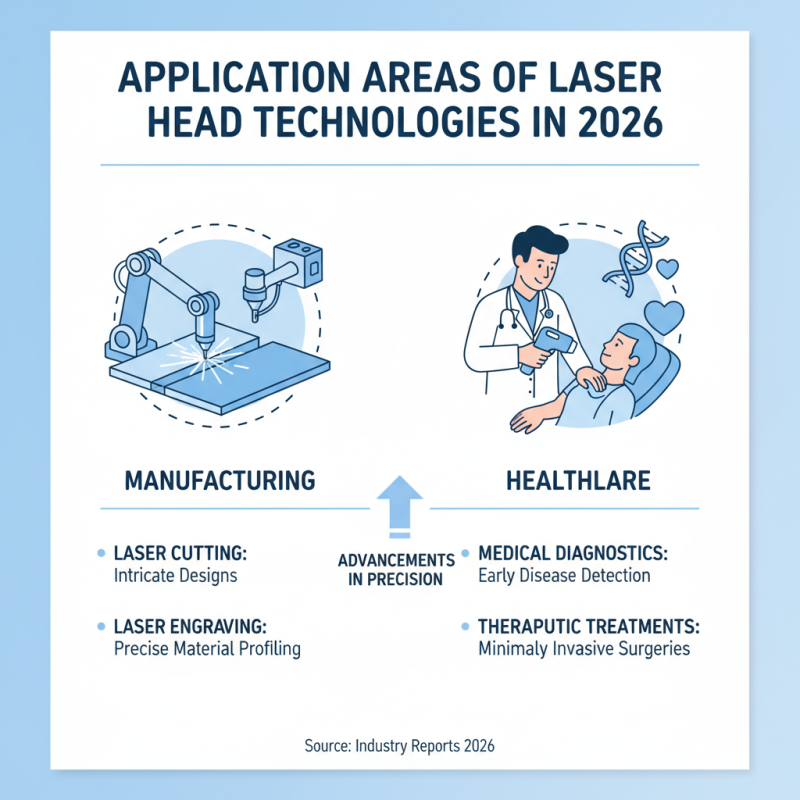
The advancements in laser head technologies have greatly expanded their application areas in 2026. Industries such as manufacturing and healthcare utilize high-precision laser heads for an array of tasks. In manufacturing, laser cutting and engraving have become standard practices. These methods allow for intricate designs and precise material profiling.
In healthcare, laser heads are vital for surgeries. They offer minimal invasiveness and faster recovery times. For instance, laser technology is used in eye surgeries and dermatological procedures. It’s transforming patient experiences, as precision minimizes damage to surrounding tissues.
While the benefits are substantial, challenges remain. Not all users can fully grasp these advanced technologies. Training is essential for effective use. Some argue that costs may prevent smaller businesses from accessing these tools. This raises questions about equity in technology adoption. Overall, the strides are remarkable, but ongoing discussions about accessibility and education are requisite for widespread implementation.
Future Challenges and Opportunities in Laser Head Development
The future of laser head technology holds both challenges and opportunities. Innovations in this field can lead to advancements in manufacturing, healthcare, and telecommunications. However, researchers face significant obstacles, such as materials limitations and high production costs. Overcoming these barriers requires creativity and collaboration among scientists and engineers.
One major challenge is the development of more efficient materials. Current materials often struggle to withstand extreme operational conditions. This limits the performance of laser heads. Additionally, the cost of new materials can be prohibitive. Finding accessible alternatives remains a pressing concern. The industry must explore novel approaches to innovation while managing expenses.
Opportunities abound in the integration of AI and machine learning. These technologies can optimize laser head performance and predictive maintenance. By harnessing data analytics, manufacturers can enhance efficiency and reduce downtime. Yet, engaging with these technologies presents its own complexities. Ensuring accurate data collection and analysis should not be overlooked. Engaging in open dialogue about these challenges can foster a more resilient future for laser head development.
2026 Top Laser Head Technologies and Innovations
| Technology Type |
Key Features |
Applications |
Future Opportunities |
| Fiber Lasers |
High efficiency, compact size, excellent beam quality |
Metal cutting, welding, marking |
Growth in industrial applications, integration with automation |
| Solid-State Lasers |
Reliable, robust, suitable for various materials |
Material processing, medical applications |
Emerging medical technologies, advancements in materials |
| CO2 Lasers |
Good for non-metal materials, high power options |
Acrylic cutting, engraving |
Innovations in eco-friendly materials and processes |
| Diode Lasers |
Compact, efficient, low cost |
Printing, medical therapies |
Integration with portable devices, advanced medical solutions |
| Ultrafast Lasers |
Short pulse durations, high peak power |
Micro machining, scientific research |
Expanding research capacities, novel applications in materials science |