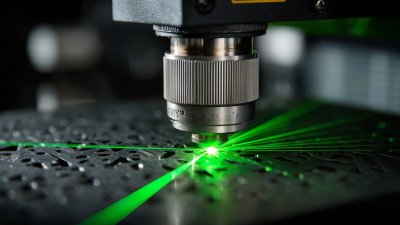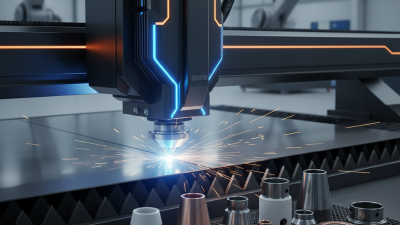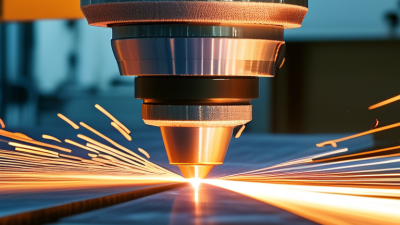
Choosing the right Laser Head in 2026 requires more than comparing wattage or buying the newest model. The correct choice depends on material, machine design, working distance, and production goals. A steel workshop may need a high-power fiber Laser Head with stable beam delivery. A sign maker may prefer finer control for acrylic, wood, or coated metal. Small details matter. Spot size, focal length, cooling, connector type, and compatible software can influence results more than advertised power.
Reliable selection begins with measurable evidence. Review the manufacturer’s technical data, service history, warranty terms, and replacement-part availability. Check whether the Laser Head supports the machine’s controller and mounting system. A practical test should examine edge quality, cutting speed, heat distortion, and repeatability across several samples. A clean first cut proves very little. Long-term stability matters more. Experienced operators also inspect lens contamination, nozzle alignment, airflow, and temperature changes during extended production.
Specifications can mislead. A higher power rating may increase operating costs or expose weaknesses in the motion system. The “best” Laser Head is not always the fastest one. It should match the material range, duty cycle, maintenance skills, and safety procedures of the workplace. No choice is perfect. Even a carefully researched decision may require adjustment after real-world testing. This guide explains the key technical factors, common purchasing mistakes, and practical evaluation methods for selecting a dependable Laser Head in 2026.
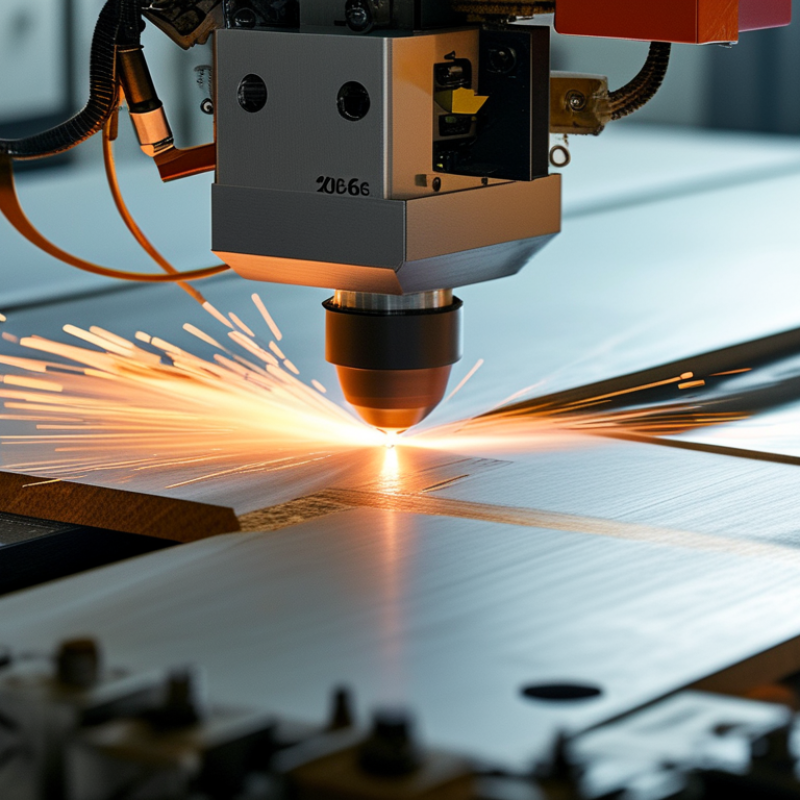
Choosing a laser head starts with the job, not the machine’s headline power. Define whether you need clean cuts, shallow engraving, fine text, or fast production. A narrow focal spot can create sharper details on coated metal and wood. A longer focal length may handle uneven sheets more safely. These choices affect kerf width, edge quality, heat marks, and setup time.
Material requirements come next. Wood, acrylic, fabric, metal, and stone react differently to wavelength and heat. For example, a head designed for infrared processing may suit many metals, while a blue or near-infrared system can behave differently on organic materials.
The World Bank’s Commodity Markets Outlook shows continued volatility in metal prices, making material waste increasingly expensive. Meanwhile, Grand View Research reports that the global laser technology market is expected to maintain strong growth through 2030. That growth reflects wider industrial use, but it does not make every laser head universal. A head that performs beautifully on plywood may disappoint on reflective aluminum. I still test small samples before approving a production setting.
Tips: Match the head to your thickest routine material, not your occasional experiment. Check spot size, working distance, autofocus range, nozzle compatibility, and assist-gas control. Record speed, power, and focus after each test. Small notes prevent repeated mistakes. Also question the first result; a clean surface can hide weak penetration or internal heat damage.

Choosing a laser head starts with the material, not the machine’s maximum wattage. Fiber heads, usually operating near 1,030–1,080 nm, suit reflective metals such as steel, aluminum, and copper. CO2 heads near 9.3 or 10.6 μm work well on wood, acrylic, glass, and fabrics. UV heads around 355 nm create smaller heat-affected zones for plastics and delicate electronics. Galvanometer heads favor fast marking, while fixed-focus cutting heads provide steadier kerf control. Three-dimensional heads help with uneven surfaces, but their calibration needs more attention.
Power selection should match thickness, speed, and surface finish. Marking commonly uses 10–50 W, thin-sheet cutting often needs 500 W–3 kW, and heavy steel processing may require 6–20 kW. These ranges are practical starting points, not guarantees. According to the MarketsandMarkets 2024 Industrial Lasers Market report, the sector is projected to grow at roughly 6.6% CAGR through 2028. That growth reflects wider adoption, but it does not make every high-power head efficient. In shop-floor tests, excessive power sometimes increased oxidation and edge roughness. I have also seen wavelength assumptions fail on coated materials.
Tips: Check the material’s absorption curve before choosing a head. Compare spot size, focal length, nozzle design, and assist-gas compatibility. Request a sample test at your intended speed. A 2 kW head may outperform a 6 kW unit on thin reflective sheet. Do not trust wattage alone.
| Laser Head Type | Typical Wavelength | Typical Optical Power Range | Best-Suited Materials | Common Applications | Main Advantages | Important Limitations | Selection Guidance |
|---|---|---|---|---|---|---|---|
| CO₂ Laser Head | 9.3–10.6 µm | 30–300 W Typical industrial systems may be higher |
Wood, acrylic, paper, cardboard, textiles, leather, rubber, glass and many non-metallic materials | Cutting, engraving, marking and sign production | Excellent absorption by most organic and polymer materials; strong cutting capability; produces smooth edges on many non-metals | Most bare metals reflect this wavelength; glass and transparent plastics may require application-specific settings; beam delivery often uses mirrors | Choose this type when non-metal cutting or deep engraving is the primary requirement and the material absorbs infrared radiation effectively |
| Fiber Galvo Marking Head | 1,030–1,080 nm | 20–100 W for common marking systems | Stainless steel, carbon steel, aluminum, copper, brass, titanium and some engineering plastics | Annealing, engraving, etching, serial numbers, barcodes and surface marking | High electrical efficiency, compact design, long source life and excellent performance on metals | Limited cutting depth compared with dedicated cutting heads; untreated transparent materials generally absorb this wavelength poorly | Choose this type for fast, high-contrast metal marking and applications requiring low maintenance and repeatable beam quality |
| Fiber Cutting Head | 1,030–1,080 nm | 1–30 kW in industrial cutting systems | Carbon steel, stainless steel, aluminum, brass, copper and other conductive metals | Sheet-metal cutting, tube cutting, fabrication and high-throughput production | High cutting speed, narrow kerf, strong metal absorption and compatibility with assist gases such as oxygen, nitrogen and air | Requires precise focus control, clean optics and suitable cooling; performance depends heavily on material thickness, nozzle design and assist-gas settings | Choose this type when the main task is cutting metal rather than surface marking; select power according to material type, thickness and target throughput |
| Blue Diode Laser Head | Around 450 nm | 5–40 W optical output in common systems | Wood, dark acrylic, leather, paper, cardboard, some coated metals and dark-colored plastics | Desktop engraving, light cutting, craft work and small-format marking | Lower system cost, compact size and good absorption by many dark organic materials; can mark selected metals with suitable coatings | Lower cutting capacity than CO₂ and fiber systems; clear or light-colored materials may transmit or reflect much of the energy | Choose this type for compact equipment, low material thicknesses and budget-sensitive engraving or light-cutting work |
| UV Laser Head | Around 355 nm | 3–20 W average output for many precision marking systems | Plastics, films, glass, ceramics, semiconductors, painted surfaces and sensitive electronic materials | Cold marking, micro-marking, electronics processing and fine-detail engraving | Small heat-affected zone, fine spot size and strong absorption by many materials that are difficult to process with infrared lasers | Higher equipment cost; optics and source alignment require careful maintenance; average power is usually lower than industrial fiber systems | Choose UV when heat-sensitive materials, minimal discoloration or very small marking features are more important than maximum throughput |
| Green Laser Head | Around 515–532 nm | 5–30 W in typical marking applications | Copper, brass, gold, silver, reflective metals and selected transparent or colored materials | Fine marking, solar components, electronics and processing of reflective metals | Better absorption on some reflective metals than near-infrared wavelengths; supports detailed marks with reduced reflection risk | Usually more expensive and less common than fiber marking systems; power and process windows can be narrower | Choose green when near-infrared absorption is inadequate, especially for reflective metals or specialized precision applications |
| Pulsed Nd:YAG Laser Head | Around 1,064 nm | 10–100 W average output High peak power in short pulses |
Steel, stainless steel, aluminum, precious metals and selected coated components | Deep engraving, spot welding, jewelry processing and precision metal marking | Short pulses can deliver high peak energy with controlled heat input; suitable for detailed work and localized processing | Usually less energy-efficient and less compact than modern fiber sources; requires careful pulse and thermal management | Choose this type when pulse control, localized heating or deep metal marking is more important than maximum electrical efficiency |
| Excimer Laser Head | 193–351 nm | Application-specific; commonly measured by pulse energy and repetition rate | Polymers, semiconductor materials, thin films, biological materials and specialized coatings | Photochemical micromachining, lithography, surface treatment and precision ablation | Very shallow material removal, high precision and limited thermal penetration in suitable processes | Complex gas handling, higher operating requirements and specialized maintenance; not normally selected for general-purpose cutting or engraving | Choose this type only for advanced industrial, medical or semiconductor processes that require ultraviolet photochemical ablation |
Note: Actual performance depends on beam quality, spot size, pulse duration, focal length, scan speed, material thickness, cooling, optics and assist-gas settings. Always confirm the laser head’s wavelength, maximum continuous power, peak power, working distance and safety requirements before selection.
How to Choose the Right Laser Head in 2026?
Match beam quality, spot size, and focus to your application
Choosing a laser head starts with the material, not the machine’s headline power. Beam quality, expressed through M², controls how tightly energy can be focused. A lower M² usually produces a smaller, more stable spot. ISO 11145 defines key beam terms, while ISO 11554 supports practical power and energy measurements. In cutting trials, a 0.1 mm focus error can visibly widen the kerf, especially on thin sheet metal. Small details matter.
Spot size must fit the task. Fine marking may need a compact spot for sharp edges and readable codes. Welding often benefits from a larger, more forgiving spot. For deep penetration, check focus position, Rayleigh range, and working distance together. MarketsandMarkets estimates the laser processing market will grow from about USD 7.1 billion in 2024 to USD 11.7 billion by 2029. That growth reflects wider adoption, but it also raises selection pressure. More power cannot repair poor beam delivery. I have seen operators choose a head by wattage alone. That decision sometimes fails.
Tips: Ask for measured M², spot-size data, and focus tolerance. Test the head on your actual material, thickness, and speed. Record edge roughness, heat tint, and kerf width. Do not trust a perfect datasheet result; factory conditions are rarely your floor conditions. Recheck the lens after thermal drift, dust, and several production hours.
Match beam quality, spot size, and focus to the application. The chart shows typical target spot-diameter ranges used for common industrial laser processes.
| Application | Typical M² target | Focus guidance | Selection priority |
|---|---|---|---|
| Fine marking | ≤ 1.5 | Short focal length and precise Z control | Small spot and high positional accuracy |
| Precision cutting | ≤ 2.0 | Moderate focal length with stable waist position | Beam quality and kerf control |
| General cutting | ≤ 3.0 | Longer focal length for working distance | Depth of focus and process tolerance |
| Laser welding | ≤ 5.0 | Adjustable focus for penetration and bead width | Energy density and focus stability |
| Laser cleaning | ≤ 6.0 | Longer working distance and larger scan field | Coverage, depth of focus, and uniformity |
Lower M² values indicate better beam quality and generally support smaller, more consistent focused spots. A smaller spot increases power density, while a longer focal length usually provides more working distance and depth of focus. The appropriate laser head should balance spot size, beam quality, focal position, and the required processing tolerance.
Compatibility should be checked before power ratings. Match the laser wavelength with the material’s absorption behavior, coating, and thickness. Confirm the head’s mounting pattern, communication interface, focal range, and working distance. A mismatch can create uneven kerfs, excessive spatter, or wasted energy.
The Grand View Research Laser Processing Market Report estimates the sector could grow at about 8% annually through 2030. That growth does not make every laser head interchangeable. In practical commissioning, small interface differences often cause the longest delays.
High-power heads need stable thermal control, not merely a larger chiller. Check rated coolant temperature, flow, pressure, filtration, and alarm outputs. Water-cooled systems may offer better stability, while air-cooled designs can simplify maintenance.
The U.S. Department of Energy reports that industrial motor systems account for more than 20% of total commercial and industrial electricity use. Cooling inefficiency therefore affects operating cost. I have seen teams underestimate blocked filters and rising coolant temperatures. They should not.
Select interlocks, emergency stops, key control, beam enclosures, and compatible protective eyewear. Verify the optical density for the specific wavelength. IEC 60825-1 classifies laser hazards by accessible emission, while ISO 11553-1 addresses machinery safety requirements. Add fume extraction when processing coated or composite materials.
A safety label is not a safeguard. Test every interlock during commissioning and scheduled maintenance.
The uncomfortable question is simple: would the system remain safe after one sensor failed?
How to Choose the Right Laser Head in 2026?
Budget should guide your first laser head choice, but it should not control every decision. A low-cost head may fit occasional cutting, engraving, or marking. However, unstable focus can increase scrap and adjustment time. Grand View Research valued the global laser processing market at about USD 18.6 billion in 2023. It also projected an 8.6% compound annual growth rate through 2030. That growth suggests rising demand for reliable, adaptable equipment.
Check upgrade options before paying for a basic configuration. Look for replaceable lenses, adjustable focal lengths, sensor compatibility, and accessible protective windows. These features can extend useful life as your workload changes. According to MarketsandMarkets, automation and process monitoring remain major drivers in industrial laser processing. A head that supports monitoring may cost more today. It can reduce manual checks tomorrow.
Long-term use requires more than high power. Match the head with your material thickness, duty cycle, cooling method, and maintenance skills. In workshop testing, small alignment errors often became visible after several hours, not immediately. That detail is easy to miss. I would also question impressive speed claims without testing edge quality and thermal stability. A cheaper head can be sensible for light work. It becomes a false economy when upgrades, downtime, and replacement optics exceed the original savings. Inspect service access carefully. Technicians need clear paths for cleaning, calibration, and routine replacement.