Leave Your Message

What Is Metallurgical Bonding Cladding and How Does It Work?

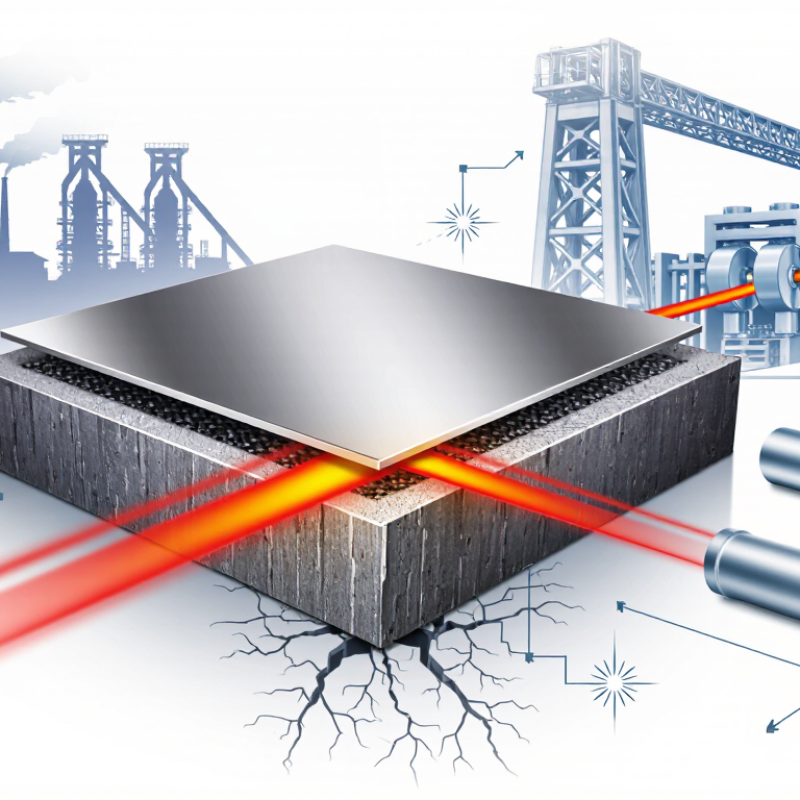
Metallurgical Bonding Cladding joins dissimilar metals through heat, pressure, or both. The process creates a metallurgical interface, not a simple painted or mechanically fastened surface. That distinction matters when equipment faces abrasion, corrosion, high temperature, or repeated pressure cycles.

The World Steel Association reported approximately 1.89 billion tonnes of crude steel production in 2023. The International Energy Agency estimates that steelmaking produces about 7% to 9% of global energy-related carbon dioxide emissions. These figures make service-life extension increasingly important. A bonded stainless-steel, nickel-alloy, or titanium layer can protect a cheaper structural substrate. It may reduce replacement frequency, material consumption, and maintenance downtime. Sometimes, however, the added layer increases fabrication complexity. That trade-off deserves honest attention.

Sindo Kou, a respected welding-metallurgy author, defines welding as “a process of joining materials by melting them together, with or without the use of a filler material.” His principle helps explain why interface control is central to cladding performance. Heat input, surface preparation, dilution, and cooling rate can alter the bond zone. Microscopic defects may later become visible cracks.

Industry practice relies on evidence. ASTM A263, A264, and A265 address stainless-steel, nickel-alloy, and titanium-clad products. ASTM A578/A578M supports ultrasonic examination of flat-rolled steel products. Reliable suppliers also document shear testing, bend testing, chemical analysis, dimensional checks, and traceability. This article examines how Metallurgical Bonding Cladding works, where it performs best, and why a visually sound bond is not always a durable one.
What Is Metallurgical Bonding Cladding and How Does It Work?

Definition and Purpose of Metallurgical Bonding Cladding

Metallurgical bonding cladding is a permanent joining process between two different metals. Heat, pressure, or both create a bond at the atomic interface. It is not a paint layer, mechanical fastener, or ordinary adhesive. The cladding becomes part of the component’s working surface. The interface matters.

Its purpose is practical. A corrosion-resistant alloy can protect a stronger, less expensive base metal. A wear-resistant layer can extend service life around valves, pipes, or pressure equipment. Some cladding systems also improve heat transfer or reduce maintenance in demanding environments. The base metal supplies structural support, while the outer metal handles the harsh exposure. This combination can reduce material use without sacrificing performance.

Manufacturers may use roll bonding, weld overlay, explosive bonding, or controlled hot pressing. Each method requires careful control of surface cleanliness, temperature, pressure, and cooling. Even a small oxide film or trapped void can weaken the interface. Quality engineers often verify bonding through ultrasonic testing, microscopic examination, hardness checks, and cross-sectional inspection. These tests reveal whether the layers joined continuously or only appeared connected from the outside. In practice, the term can sound more precise than it is. Bond strength varies with metal pairing, thickness, and production conditions. Engineers should therefore match the cladding method to the service temperature, chemical exposure, stress level, and inspection requirements. A visually smooth surface proves very little. Reliable cladding depends on measurable interface performance, documented process control, and honest evaluation of its limitations.
Materials Commonly Used in Metallurgical Cladding

Metallurgical bonding cladding joins two metals through heat, pressure, or controlled deformation. The base metal supplies strength and structure. The cladding layer provides corrosion resistance, wear protection, or heat tolerance. Material selection controls whether the bond survives real service conditions.

Carbon steel is a common substrate because it is strong, affordable, and easy to fabricate. Stainless steel is often applied where moisture, chemicals, or food-processing environments create corrosion risks. Nickel-based alloys handle high temperatures and aggressive chemical exposure. They are useful in reactors, heat exchangers, and furnace components. Titanium cladding offers low density and strong resistance to seawater, but its higher cost demands careful design.

Aluminum cladding can reduce weight while protecting a stronger core. Copper is selected when electrical or thermal conductivity matters. Each pair has limits. Different thermal expansion rates can create stress during heating and cooling. Surface contamination can also weaken the bond. A clean interface is essential. Testing may include ultrasonic inspection, bend tests, hardness checks, and microscopic examination.

Material selection is rarely perfect. A highly corrosion-resistant layer may be difficult to weld or repair. A cheaper combination may require thicker cladding. Engineers should examine temperature cycles, fluid chemistry, impact loads, and expected maintenance before approval. Small defects matter. A thin unbonded area can grow under pressure, even when the outer surface looks sound.

How the Metallurgical Bonding Process Works Step by Step

Metallurgical bonding cladding joins two metals through heat, pressure, or both. Unlike a simple coating, it creates an interface where atoms diffuse across clean surfaces. The process begins with material selection. Engineers match the base metal with a corrosion-resistant or wear-resistant alloy. This choice depends on temperature, load, and chemical exposure.

Surface preparation follows. Oxides, oil, and rough contamination are removed by machining, blasting, or chemical cleaning. Even a small defect can interrupt bonding. The sheets are then aligned and pressed together. In roll bonding, controlled pressure and heat reduce thickness while forcing intimate contact. In hot isostatic pressing, high temperature and gas pressure close microscopic gaps. Some applications use weld overlay instead. The filler metal melts locally, then solidifies against the substrate.

Cooling must be controlled. Uneven cooling can create residual stress, distortion, or hidden separation. Technicians inspect the interface with ultrasonic testing, shear tests, and cross-sectional microscopy. The ASM Handbook identifies diffusion, surface cleanliness, temperature, and pressure as critical bonding variables. The International Energy Agency reports that iron and steel production creates about 8% of global energy-related emissions, so efficient material use matters. The World Steel Association recorded roughly 1.89 billion tonnes of crude steel production in 2023. At that scale, small yield losses become significant. The process is not flawless. Poor parameter control still defeats good design.

Key Benefits and Performance Characteristics

What Is Metallurgical Bonding Cladding and How Does It Work?

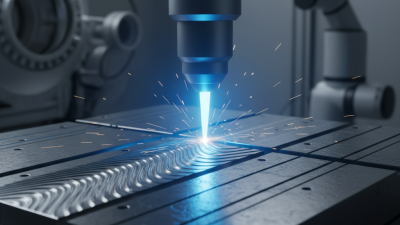
Metallurgical bonding cladding joins a corrosion-resistant alloy to a stronger base metal. Heat, pressure, or controlled impact creates atomic contact at the interface. Unlike paint or adhesive layers, the bond can remain stable under demanding temperature and pressure cycles. Common processes include hot rolling, explosive welding, and laser cladding. Each method produces different dilution, residual stress, and surface geometry.

Performance depends on more than bond strength. Engineers examine shear strength, porosity, cracking, hardness, wear resistance, and corrosion behavior. The 2016 IMPACT corrosion study estimated global corrosion costs at about US$2.5 trillion, equal to roughly 3.4% of global GDP. Proper cladding can reduce maintenance exposure, but it is not a universal shield. Poor surface preparation or thermal mismatch may create hidden interface defects. Sometimes, the weakest point is not the cladding.

Tips: Specify the service fluid, operating temperature, pressure, and expected wear before selecting materials. Ask for ultrasonic or metallographic inspection records. Measure coating thickness at several locations, not only the center. Field experience shows that edge geometry often deserves more attention. It is easy to overlook. The International Energy Agency’s industrial efficiency reports also stress that longer equipment life can reduce material and energy demand, although the actual saving depends on fabrication quality and operating discipline.

What Is Metallurgical Bonding Cladding and How Does It Work? - Key Benefits and Performance Characteristics
Dimension Typical Data or Characteristics Engineering Significance
Definition Metallurgical bonding cladding is a corrosion-, wear-, or heat-resistant metal layer permanently joined to a structural substrate through atomic-level bonding at the interface. The cladding and substrate behave as a composite material while retaining the bulk strength and geometry of the base metal.
How the Bond Forms Bonding is created by localized melting and solidification, high-temperature diffusion, or high-pressure plastic contact. Common processes include weld overlay, laser cladding, diffusion bonding, hot roll bonding, and explosive bonding. Unlike a simple mechanical attachment, the interface is formed through metallic continuity, which improves resistance to peeling, delamination, and shear loading.
Typical Cladding Thickness Approximately 0.2–3 mm for laser cladding; 2–20 mm for weld overlay; and about 1–50 mm for many bonded plate applications. Actual limits depend on the process, alloy, and component design. Thin layers minimize material consumption, while thicker layers provide greater wear allowance, corrosion life, or machining stock.
Common Cladding Alloys Stainless steels, nickel-based alloys, cobalt-based wear alloys, nickel-copper alloys, titanium, aluminum, and selected copper alloys are frequently used. Alloy selection is based on the service environment, including chloride exposure, acids, high temperature, erosion, abrasion, or galling.
Typical Substrate Materials Carbon steel, low-alloy steel, stainless steel, pressure-vessel steel, and selected aluminum or titanium alloys can serve as substrates when metallurgical compatibility is acceptable. The substrate provides structural strength and cost efficiency, while the cladding supplies the required surface performance.
Interface Quality A properly produced interface is continuous and free from visible gaps. Fusion-based processes may typically achieve dilution levels of approximately 5–20%, depending on heat input and process control. Controlled dilution helps preserve the intended chemistry and performance of the deposited surface while maintaining adequate bonding.
Bond Strength Bond strength is process- and material-dependent. Properly qualified metallurgical cladding can withstand substantial tensile, shear, thermal, and impact stresses without adhesive-type separation. Qualification testing should be based on the application and may include bend, tensile, shear, ultrasonic, radiographic, metallographic, or corrosion testing.
Porosity and Defects Fusion cladding can be produced with very low porosity when shielding, surface preparation, heat input, and powder or wire delivery are controlled. Entrapped oxides, cracks, lack of fusion, and excessive dilution are key defect risks. Low defect levels improve corrosion resistance, fatigue performance, machinability, and service reliability.
Corrosion Resistance Cladding can provide resistance to general corrosion, pitting, crevice corrosion, oxidation, or selected chemical media, depending on the alloy and environment. Only the exposed cladding surface needs to provide the required chemical resistance, allowing a less expensive structural substrate to be used underneath.
Wear Performance Hardfacing claddings can improve resistance to abrasion, erosion, adhesive wear, and metal-to-metal contact. Performance depends on hardness, carbide or hard-phase content, microstructure, and counterface conditions. Wear-resistant surfaces can extend maintenance intervals and restore worn dimensions without replacing the entire component.
Thermal Performance Many nickel-, cobalt-, stainless-, and refractory-alloy claddings retain useful oxidation or corrosion resistance at elevated temperatures. Thermal expansion differences must be considered. Matching thermal expansion, controlling residual stress, and applying suitable heat treatment help reduce cracking and distortion during thermal cycling.
Heat-Affected Zone Fusion-based methods create a heat-affected zone in the substrate, while solid-state methods generally reduce melting-related effects. The affected width varies with heat input, travel speed, and material thickness. Heat input must be controlled to limit substrate softening, phase transformation, distortion, and residual stress.
Dimensional Accuracy Laser cladding generally offers relatively precise deposition and low heat input; weld overlay provides higher deposition rates but may require more post-machining. Process selection balances deposition rate, dimensional control, surface finish, repair allowance, and production cost.
Key Benefits Material savings, extended component life, repairability, improved corrosion and wear resistance, reduced downtime, and the ability to combine dissimilar metals. Metallurgical cladding places high-performance material only where it is needed instead of manufacturing the entire component from an expensive alloy.
Primary Limitations Potential distortion, residual stress, thermal cracking, dilution, metallurgical incompatibility, surface preparation requirements, and the need for process qualification. Successful design requires compatibility checks, controlled processing, inspection, and validation under the intended service conditions.
Typical Inspection Methods Visual inspection, dimensional measurement, dye penetrant testing, magnetic particle testing, ultrasonic testing, radiographic testing, hardness testing, and cross-sectional metallography. Inspection confirms surface integrity, bond continuity, defect control, thickness, hardness, and compliance with the specified acceptance criteria.
Data Basis The numerical ranges are representative engineering values rather than universal limits. Final performance depends on alloy combination, component geometry, process parameters, thermal treatment, surface preparation, and service conditions.

Typical Applications and Quality Considerations

Metallurgical bonding cladding joins a corrosion-resistant alloy to a stronger, less expensive substrate. Unlike paint or mechanical lining, the interface forms through heat, pressure, or controlled explosive energy. Weld overlay, hot rolling, laser cladding, and explosive bonding are common production routes. The process must limit dilution, because excessive mixing can reduce the cladding’s chemical resistance.

Typical applications include pressure vessels, refinery piping, heat exchangers, offshore structures, and mining wear components. These systems often face chloride, hydrogen sulfide, abrasion, or high-temperature oxidation. The NACE IMPACT study estimated global corrosion costs at about US$2.5 trillion annually, equal to roughly 3.4% of global GDP. That figure explains why a thin, properly bonded alloy layer can protect a large steel structure. The protection is not automatic.

Quality control begins with surface preparation and verified base-metal chemistry. Inspectors commonly use ultrasonic testing to measure thickness and detect disbonding. Dye penetrant or magnetic-particle testing can reveal surface cracks, while radiography may identify internal defects. A practical qualification program should also check hardness, bend performance, shear strength, porosity, and corrosion resistance under expected service conditions. ASTM and ISO procedures help make these results comparable.

Small defects matter. Local overheating may create a hard heat-affected zone, while poor travel control can leave weak fusion lines. Process records, calibrated equipment, and traceable test coupons improve reliability. Still, published corrosion estimates are not fresh; the NACE study dates from 2016. Site-specific chemistry and operating data deserve greater weight than a convenient headline number.